
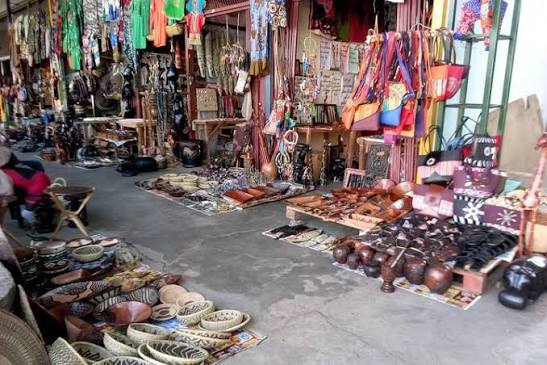
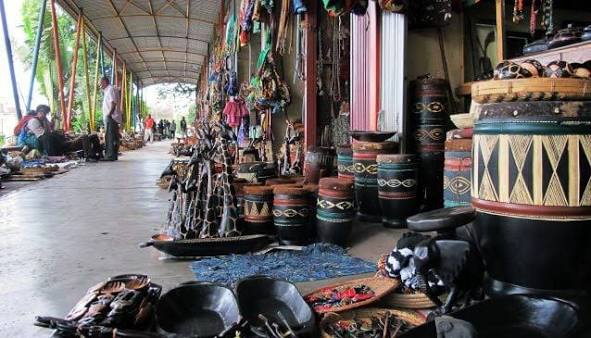
Livingstone is often treated as a base rather than a destination. Spend a few hours in town and that changes. Museums, markets, older buildings, local food and everyday commerce give the Victoria Falls trip a sense of place.
Start with the Livingstone Museum
The museum gives useful context through archaeology, natural history, local cultures and the history associated with David Livingstone and the wider region. You do not need to spend the whole day inside; even a focused visit makes the rest of town easier to understand.
Look beyond the shopfronts
Central Livingstone combines older civic and commercial buildings with modern businesses. A local guide can connect individual streets and buildings to the town’s railway, tourism and administrative history without turning the outing into a lecture.
Maramba Market
Markets show how a city works in a way that monuments cannot. Produce, clothes, household goods, food and daily trade create a very different experience from the tourist-facing parts of Livingstone.

What should you eat?
Rather than looking for one fixed “must-eat” dish, ask what is good that day. A Zambian meal may centre on nshima with vegetables, beans, fish, chicken or meat. Local recommendations are usually more useful than a generic online list.
Markets and photography
Ask before taking close photographs of traders or shoppers. People are at work. A guide can help with introductions and explain when a picture is welcome.
How much time do you need?
Around three hours works well for a guided Livingstone city and market tour. Add more time if you want a slower museum visit or lunch in town.
Understanding Livingstone town makes the rest of the trip feel more grounded. You stop seeing it only as the road between the hotel and Victoria Falls.
Explore Livingstone with local context
Combine city history, museum context and market life in an easy half-day experience.
Travel note: Opening hours and individual market or museum arrangements can change; confirm current details locally.